



BlogWelding for Dummies
January 5, 2026
Tips
Welcome to Cutting Edge Supply’s version of “welding for dummies.”
If you have a project that requires welding and are unsure about which type of welding is the best fit, this guide should help you decide. There are many types of welding, and it can be confusing so as wear part experts in the heavy equipment industry, we’ll try to help simplify things.
Most types of welding fall under the overall category of arc welding. Arc welding uses electricity to create enough heat to melt and bind metal to metal.
In this article, we will be focusing on the four most common types of arc welding: MIG, TIG/GTAW, FCAW and SMAW welding. Whether you’re welding for work or as a DIY home project, it is good to have a more in-depth understanding of these common weld types before getting started.
1. MIG: Metal Inert Gas Welding
MIG welding was developed in the 1940s and is commonly found in the home improvement or automotive industries. This type of welding must be used where there is a low chance of wind or drafts blowing the shielding gas away. It’s also an excellent choice for novice welders, as it is a simpler form of welding. This process is semi-automated, meaning that the welding machine will continue to fill in the joint that is being welded. Additionally, the electrodes used in this machine do not need to be changed in between welds. Stainless steel, copper, nickel, carbon steel, aluminum and other sheet metal work are the most common types of products used in MIG welding.
In MIG welding, an electric arc is created by feeding a continuous solid wire electrode through a welding gun. A shielding gas (commonly argon, carbon dioxide, or helium) is simultaneously fed through to the gun to protect the molten weld pool from any airborne contamination. When you pull the trigger, the wire melts and becomes the filler metal that joins the pieces, while the gas keeps oxygen and moisture from weakening the weld.
Lastly, it is important to match the shielding gas to the electrode and the base metal. The type of gas used can determine how deep the weld will penetrate, the characteristics of the welding arc, and the mechanical properties of the weld. If you are unsure of what type of gas to use, it is recommended that you contact your welding supply store. If you are doing a DIY project, MIG welding is a great option. There is little weld splatter and creates good-quality welds. It is easy to learn but is still used often by professionals.
2. TIG/GTAW: Tungsten Inert Gas Welding
TIG welding (also known as GTAW) was also introduced in the 1940s. In this form of welding, the operator must use two hands to weld. One hand is used to hold the TIG torch that produces the arc, while the other is used to add filler metal to the weld joint. TIG welding requires heat, shielding, and filler metal. Heat is produced by electricity that is passed through the tungsten electrode. This is done by creating an arc to the metal. The filler metal in this case is a wire that has been dipped by hand into the arc and melted. Shielding comes from a compressed bottle of gas (commonly argon or argon and helium) that flows to the weld area as a means of protecting it from the air. It is best if there’s an external gas supply. Additionally, it is important to recognize that non-consumable tungsten in the electrode is used to make the weld seam. The tungsten is very hard, brittle, and slightly radioactive. It also has a very high melting point, which allows the arc to maintain temperature of up to 11,000 degrees Fahrenheit.
This form of welding is one of the most challenging to master. It requires precision and skill as there is only a small area between the arc and the place that is going to be welded. Though a slow process, this type of welding produces the highest quality of welds. They are extremely strong. Because of this, TIG is often used to form critical weld joints and to weld metals other than common steel. This typically looks like thin, non-ferrous materials such as aluminum, copper, lead, and nickel. As a whole, TIG welding is normally found in automotive and airplane manufacturing but can prove useful in many other industries. For professionals, TIG welding is a fantastic type of welding to employ to get some of the highest quality welds. If you are doing more of a DIY project, though, we do not recommend attempting this form of welding as it is difficult to learn and time-consuming.
3. FCAW: Flux Cored Arc Welding
Flux Cored Arc Welding was created in the 1950s. Essentially, a new type of electrode was created that can be used on a MIG welding machine. Because of this, this type of welding is very similar to MIG welding. FCAW and MIG welding both utilize continuous wire feeds and have similar power supplies and equipment. Both are also semi-automatic and have a high production rate. However, FCAW has flux and creates slag that must be chipped off after the weld is complete. This arc uses a hollow wire with flux in the center. The electrode wire’s shielding comes from the flux core–meaning that the operator can weld outdoors in windy conditions, or indoors with drafts. Oftentimes, carbon steels, cast iron, nickel-based alloys, and some stainless steels are welded under this method. Unfortunately, most non-ferrous exotic metals (such as aluminum) cannot be welded.
FCAW also has an electrode type called Dual Shield, where gas such as CO2 and Argon (mix 75-25), is used to make clean, high deposition welds. This is the most common type of welding used at Cutting Edge Supply for repair and fabrication of large mining and construction equipment due to its versatility, efficiency, and the high deposition rates required in our industry.
FCAW is also popular for construction projects due to its portable nature. This style of welding is easy to learn, making it a good option for novice welders. Additionally, FCAW is also similar to “stick” welding as it is basically a SMAW welding electrode turned inside out. FCAW welding is not great for aesthetics and is also on the expensive side. If neither of those issues concern you, this type of welding could be a great option for you! If they are of concern, you might want to consider another option, such as MIG or SMAW welding.
4. SMAW: Shielded Metal Arc (“Stick”) Welding
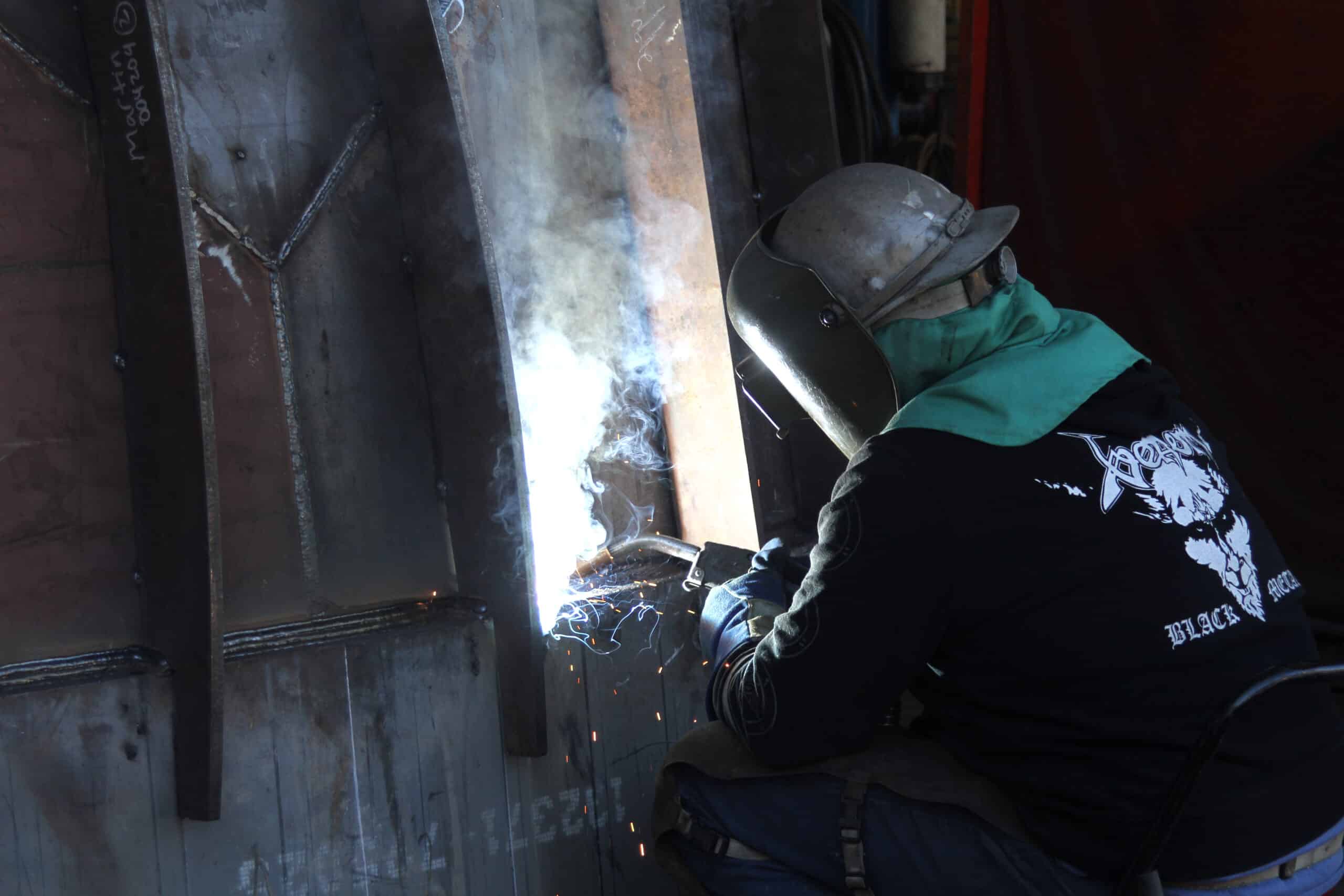
SMAW, also known as “stick” welding, is another common welding technique. The nickname “stick” welding was created from the electrode that welds the metal which resembles the shape of a stick. In this type of welding, electricity is used to melt an electrode (also known as a metal filler rod or stick). The electricity also melts the metal joint at the same time. This fuses the two pieces of metal together and fills the joint with filler metal. This process works best for thicker metals (1/16 inch or thicker).
SMAW is commonly practiced in projects such as tractor repairs, power plant construction, or construction with structural steel. Metals used in this welding process are normally stainless steel, steel, nickel-based alloys, chrome, and aluminum (though aluminum is doable, it is not recommended in comparison to the others). Stick welding is another common type of welding used by beginners. So if you are welding more as a hobby, you might want to employ SMAW welding in your projects.
Reminders!
In general, it is important to investigate the thickness of the material, the type of material being welded, the wear or stress that will be placed on the area, and the amount of time at your disposal before deciding on what type of welding to use. Additionally, be sure to have the right safety gear before starting (including a helmet, gloves, and a jacket). If you’re doing a DIY project at home, we recommend using one of the easier welding techniques, such as MIG or stick welding. Remember, it’s always easier to do it right the first time instead of fixing mistakes later. Take your time, and if you’re still struggling, look into other resources, such as the American Welding Society (AWS) website.